
 Headlight Bulbs


 Track Order
 My Vehicles
 Contact Us














Key Takeaways
- LED headlight fans move air across a heat sink, helping transfer concentrated heat away from the LED chips and driver electronics.
- A fan is only one part of the cooling system; the LED board, copper components, bulb body, and heat sink must also conduct heat effectively.
- Fan-cooled bulbs can manage more heat within a compact structure, while fanless bulbs rely on larger fins, aluminum bodies, or copper braids.
- Poor heat dissipation may cause output to drop after warm-up, accelerate component aging, or lead to intermittent operation.
- Choose an LED bulb by its complete cooling design, physical fit, and beam pattern—not by fan speed, wattage, or advertised lumens alone.
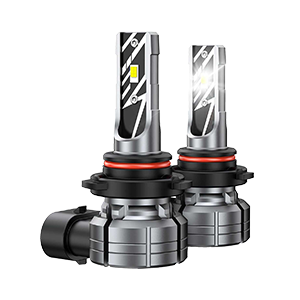
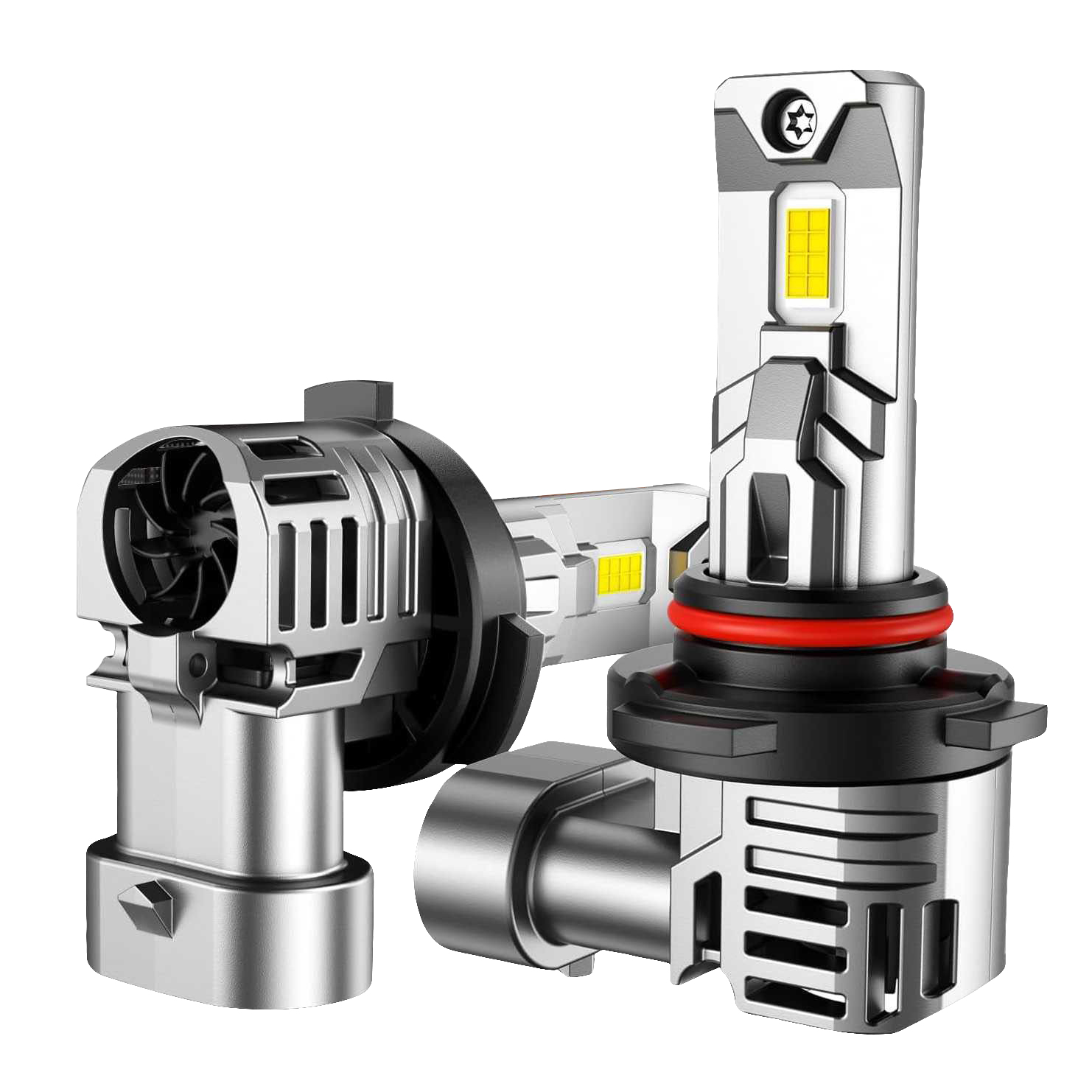
Quick Answer: LED headlights have fans because high-output LED chips produce concentrated heat around the circuit board. The fan forces air across the bulb’s rear heat sink, allowing that heat to escape faster than it would through natural airflow alone.
The fan does not cool the LED chips directly. Heat must first travel through the LED board, conductive bulb body, copper substrate, or heat pipe. The fan then moves air across the heat sink to carry that heat away.
Why Do LED Headlight Bulbs Produce Heat?
LEDs use electrical energy more efficiently than halogen bulbs, but they do not convert all incoming power into visible light. Some energy becomes heat inside the LED chips, circuit board, and electronic driver.
A halogen filament radiates much of its heat forward. An LED produces concentrated heat around its semiconductor junction—the small area inside the chip where light is generated. That heat must move away from the LED before it affects output or stresses nearby components.
A typical LED headlight cooling path works as follows:
- The LED chips produce light and heat.
- The LED board conducts heat away from the chips.
- A copper or aluminum substrate transfers heat into the bulb body.
- The bulb body or heat pipe carries heat toward the rear heat sink.
- The heat sink releases heat into the surrounding air.
- A fan increases airflow when the bulb uses active cooling.
Every stage matters. A fast fan cannot compensate for poor thermal contact between the LED board and the bulb body.
For a broader comparison of energy use, heat, and service life, read LED vs. halogen headlight bulbs.
Which Parts of an LED Headlight Bulb Need Cooling?
Cooling protects more than the visible LED chips. It also helps control the temperature of the driver board, solder joints, capacitors, and other electronic components.
| Component | Main function | Why cooling matters |
| LED chips | Produce light | Excessive heat may reduce stable output and accelerate degradation |
| LED board | Supports the chips and begins the thermal path | Poor conductivity can trap heat near the LEDs |
| Copper or aluminum substrate | Transfers heat into the bulb body | Efficient conduction reduces heat buildup |
| Driver board | Regulates electrical power | High temperatures can stress electronic components |
| Heat sink | Provides a larger cooling surface | Limited surface area slows heat dissipation |
| Cooling fan | Moves air across the heat sink | Obstructed airflow reduces active cooling performance |
The driver board converts the vehicle’s electrical input into controlled current for the LED chips. Depending on the bulb design, it may also manage voltage changes, polarity, pulse-width modulation, or vehicle bulb-monitoring signals.
Because the driver contains temperature-sensitive electronics, poor cooling can affect both light output and electrical operation.
How Does an LED Headlight Fan Work?
An LED headlight fan creates forced airflow across the rear heat sink. This process is called active cooling.
Without a fan, warm air around the heat sink must move away through natural convection. A fan speeds up this process by continually replacing warm air with cooler surrounding air. This allows a relatively compact bulb to handle more heat without requiring an oversized rear heat sink.
The cooling system performs two separate tasks:
- Heat conduction: Solid materials move heat from the LED chips toward the rear cooling assembly.
- Heat dissipation: The heat sink releases that heat into the surrounding air.
The fan assists with heat dissipation. It does not replace the copper board, heat pipe, aluminum body, or heat sink that carries heat away from the LEDs.
Why Is the Fan Located Behind the Bulb?
The cooling fan sits behind the mounting collar because the LED chips must remain close to the optical position of the original halogen filament.
Headlight reflectors and projectors are designed around a specific light-source position. Moving the LED chips forward or backward to make room for a cooling system can distort the beam pattern.
A replacement LED headlight bulb may include:
- LED chips and light board
- Upper and lower bulb body
- Retaining ring or mounting collar
- Vehicle connector
- Internal or external driver
- Heat sink
- Cooling fan
Placing the cooling system behind the mounting ring keeps the light-emitting section relatively thin. However, the fan, driver, and wiring may make the complete LED bulb longer than the original halogen bulb.
This is why matching the socket number alone is not enough. The complete bulb must also fit behind the headlight and under the dust cover.
Do All LED Headlight Bulbs Have Fans?
No. LED headlight bulbs may use active cooling, passive cooling, or a combination of both.
Active Fan Cooling
Active cooling combines a powered fan with a metal heat sink. Many designs also use a copper substrate or heat pipe to carry heat from the LED board toward the rear cooling assembly.
This approach is useful when the bulb needs to manage a relatively high thermal load without using a large passive heat sink.
Passive Fanless Cooling
Fanless bulbs rely on natural airflow and a larger heat-dissipation surface. Common passive cooling components include:
- Finned aluminum bodies
- Flexible copper braids
- Copper strips
- Extended metal heat sinks
- Heat pipes connected to cooling fins
A fanless bulb can manage heat effectively when its power level, thermal path, and heat-sink area are properly matched. Passive components still need open space, however. Copper braids should be spread out, and cooling fins should not be tightly enclosed.
Fan-Cooled vs. Fanless LED Headlight Bulbs
Neither cooling method is automatically better. The right choice depends on the bulb’s thermal load, available space, expected driving time, and complete construction.
| Factor | Fan-cooled bulb | Fanless bulb |
| Cooling method | Forced airflow across a heat sink | Natural airflow around fins or braids |
| Rear structure | Often compact for its cooling capacity | May require a larger exposed surface |
| Moving parts | Fan motor and bearings | None |
| Sound | May produce a faint operating sound | Silent |
| Main fitment concern | Fan and dust-cover clearance | Space around fins or copper braids |
| Potential issue | Fan obstruction or mechanical wear | Heat buildup in a confined space |
| Common application | Higher thermal loads in limited space | Moderate thermal loads with adequate clearance |
When Is a Fan-Cooled Bulb a Good Choice?
A fan-cooled bulb may be more suitable when:
- The LED system produces a relatively high thermal load.
- There is not enough room for a large passive heat sink.
- The vehicle is regularly used for extended nighttime driving.
- The fan has enough room to draw in and discharge air.
- The dust cover can close without pressing against the cooling assembly.
When Is a Fanless Bulb a Good Choice?
A fanless bulb may be more suitable when:
- Silent operation is important.
- You prefer a design without a fan motor or bearings.
- The headlight provides room for a larger passive heat sink.
- Cooling fins or copper braids can remain exposed.
- The bulb can control its temperature without forced airflow.
A well-engineered fanless bulb can outperform a poorly designed fan-cooled bulb. Cooling performance depends on the complete thermal path, not simply whether the bulb has a fan.
How SEALIGHT Designs LED Headlight Cooling
At SEALIGHT, we do not use one cooling structure for every LED headlight bulb. Different vehicles, bulb sizes, power levels, and installation spaces require different approaches.
Some SEALIGHT series use active fan cooling to manage heat within a compact rear structure. Others use passive aluminum heat sinks for drivers who prefer fanless operation. The goal is to match the cooling system to the bulb’s intended output and physical design.
| SEALIGHT series | Cooling approach | Designed for |
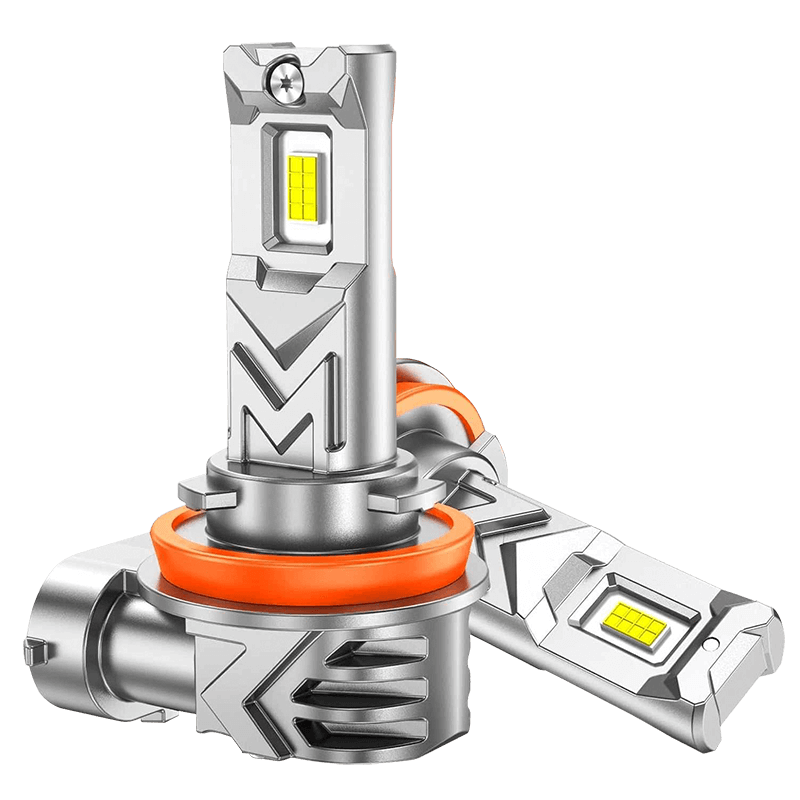
| Scoparc S7S | Copper heat pipe, aluminum structure, and built-in fan | Drivers prioritizing active cooling and sustained nighttime performance |
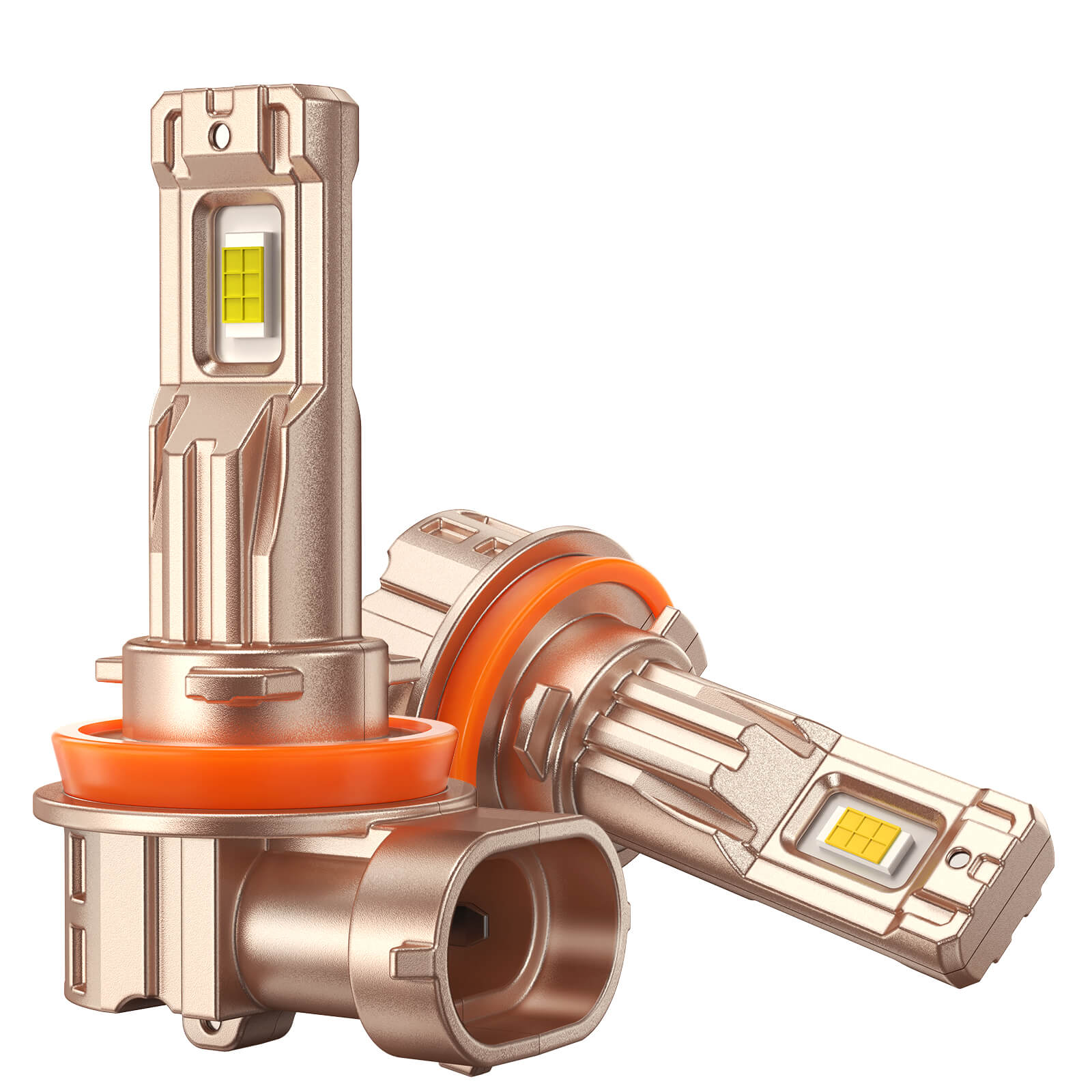
| Scoparc S2S | Copper heat pipe, copper substrate, and built-in fan | Drivers seeking a balance of cooling, compact fitment, and adjustable positioning |
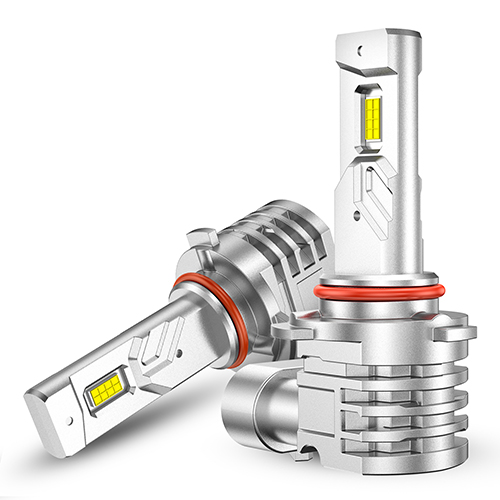
| Scoparc S2 | Integrated active fan cooling | Drivers looking for a straightforward plug-and-play-style upgrade |
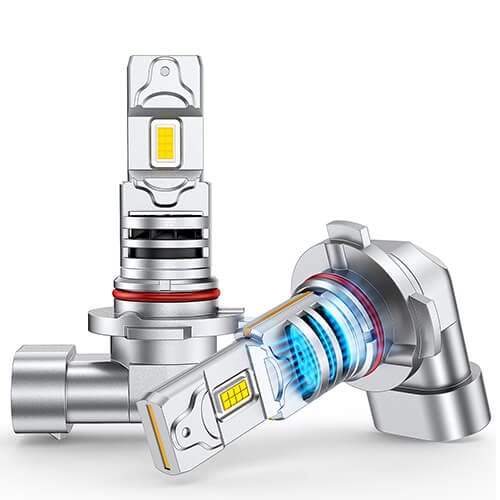
| Scoparc S1 | Finned aluminum passive heat sink | Drivers who prefer fanless cooling and fewer moving components |
Specifications and dimensions can differ by bulb size, so the exact product page should be used when comparing fitment.
Scoparc S7S: Advanced Active Cooling
The SEALIGHT Scoparc S7S combines a copper heat pipe, aluminum bulb structure, and built-in cooling fan. The heat pipe moves heat away from the LED board, while the rear fan increases airflow across the heat-dissipation area.
This design is well suited to drivers who prioritize sustained illumination during longer nighttime trips. As with any fan-cooled bulb, the rear assembly needs enough clearance for the fan to operate without interference from wiring or the dust cover.
Scoparc S2S: Cooling and Fitment in One Design
The SEALIGHT Scoparc S2S uses a copper substrate, copper heat pipe, and built-in fan to create a multi-stage thermal path.
The series is also designed around a compact, halogen-style footprint and an adjustable mounting ring. This makes S2S a practical option for drivers who need both effective cooling and more control over LED-chip orientation.
Correct orientation can improve how the LED source works with the existing reflector or projector, although the final beam pattern still depends on the vehicle’s headlight design.
Scoparc S2: A Straightforward Fan-Cooled Upgrade
The SEALIGHT Scoparc S2 is designed for drivers who want active cooling without an overly complex installation.
Its integrated fan moves air across the rear cooling structure, while the compact design supports a plug-and-play-focused installation in many compatible applications. It is a practical middle-ground option for everyday drivers comparing output, fitment, and installation convenience.
For more guidance on bulb construction and driver placement, see how to choose plug-and-play LED headlight bulbs.
Scoparc S1: Fanless Passive Cooling
The SEALIGHT Scoparc S1 uses a finned aluminum heat sink instead of a powered cooling fan.
The fanless structure eliminates fan noise and removes a moving component from the bulb. It is suitable for drivers who prefer passive cooling and have enough space around the bulb body for heat to escape naturally.
Passive cooling still depends on installation conditions. The fins should not be pressed tightly against nearby parts or enclosed in a way that prevents heat from dispersing.
Drivers can compare available sizes and cooling designs across the full range of SEALIGHT LED headlight bulbs.
What Are Heat Pipes and “Liquid-Cooled” LED Bulbs?
A heat pipe is a sealed component that transports heat from the LED board toward the rear heat sink. It usually contains a small amount of working fluid that repeatedly evaporates and condenses inside the sealed tube.
This is different from the liquid-cooling system used in an engine or computer. An LED bulb normally has no external pump, coolant reservoir, hose, or serviceable radiator.
The term “liquid cooling” often refers to this sealed phase-change heat pipe. The heat pipe transports heat, while the fan and heat sink release that heat into the surrounding air.
How Does Cooling Affect Brightness and Bulb Life?
Effective cooling helps an LED bulb maintain stable output after it has warmed up. Poor cooling may cause the LEDs or driver to reduce output as operating temperature rises.
Possible signs of excessive heat include:
- Light output dropping after several minutes
- Color changing as the bulb warms up
- Intermittent operation
- Thermal shutdown
- Driver failure
- Faster LED degradation
- Repeated bulb replacement
Cooling does not create brightness by itself. A larger fan or higher fan speed cannot correct inefficient LED chips, weak driver regulation, poor chip positioning, or an unfocused beam.
Bulb life also depends on voltage stability, operating time, environmental exposure, and manufacturing quality. Learn more in the guide to how long headlight bulbs last.
Where Can I Find Reliable LED Headlight Bulbs Online?
Effective cooling helps LED headlight bulbs maintain stable output and reliable performance. Whether you prefer active fan cooling or a silent fanless design, SEALIGHT offers options for different vehicles, installation spaces, and nighttime driving needs.
Use the SEALIGHT Automotive Bulb Finder to identify the correct bulb size for your vehicle, then compare cooling structures, fitment designs, and available series.